Finding Peace in the Eternal Flow: Hindu Death Rituals and the Cycle of Rebirth
Losing someone we love is an experience that reshapes our world, leaving an ache that often defies words. Many find comfort in understanding personal grieving journeys. I've felt that profound sense of disorientation, that yearning for just one more conversation, one more laugh. Navigating the waves of sorrow can be overwhelming, but understanding its nature can bring solace. When we navigate loss, especially within traditions rich with meaning, exploring this topic further can offer a different kind of solace. For those who follow Hinduism, the journey of grief is woven into a deep understanding of continuity-the profound concept of the cycle of rebirth Hinduism. It's not just an end; it's a transition, a step in an eternal dance that I find both humbling and, in its own way, comforting. Understanding the specifics of Hindu death rituals provides a profound framework for this transition. Losing someone we love is an experience that reshapes our world, leaving an ache that often defies words. Many find comfort in navigating the journey of loss.
I remember the quiet strength of a friend whose mother passed away, how she spoke not of finality, but of her mother's journey to the next life. It was a perspective that shifted something within me, showing a grace I hadn't fully grasped before. Witnessing traditions that embrace death not as absolute cessation, but as a significant milestone in an ongoing spiritual evolution, truly resonated with me. This is where Hindu death rituals play such a vital role – they are not merely ceremonies, but a sacred pathway guiding the departed and providing comfort to those left behind. Understanding these practices helps us appreciate a worldview where life and death are intrinsically linked, a continuous flow rather than a stark break.
While focusing on ritual and remembrance, it's also important to acknowledge that grief can bring complex emotions, and there are resources available for healing from guilt after a loss.
For those of us observing or participating in these momentous events, finding a way to honor and remember within such a profound framework is essential, exploring avenues for culturally relevant remembrance. This is where Memories of Life steps in, offering a space to create a lasting tribute that respects these deep-seated traditions. We can preserve the stories and photographs that encapsulate a life lived, creating a cherished Chicago digital legacy that families can revisit, share, and connect with for generations, integrating the essence of Hindu death rituals into modern commemoration. For those of us observing or participating in these momentous events, finding a way to honor and remember within such a profound framework is essential, exploring avenues for cultural remembrance options. We can preserve the stories and photographs that encapsulate a life lived, creating a lasting online tribute that families can revisit, share, and connect with for generations, integrating the essence of Hindu death rituals into modern commemoration.
This is where Memories of Life steps in, offering a space to create a lasting tribute that respects these deep-seated traditions. We can preserve the stories and photographs that encapsulate a life lived, creating a cherished online memorial that families can revisit, share, and connect with for generations, integrating the essence of Hindu death rituals into modern commemoration, and even providing options for digital cremation memorials to honor the departed in a contemporary way.
The intricate details of अंत्येष्टि (Antyesti) rituals are central to Hindu beliefs, guiding the soul towards its next journey.
The profound concept of the soul's transmigration and the ultimate goal of moksha deeply informs the spiritual journey after death Hinduism describes, offering solace and a framework for understanding loss.
The Philosophy of Samsara: Life, Death, and Reincarnation
At the heart of Hindu beliefs surrounding death is Samsara, the continuous cycle of rebirth Hinduism. This isn't a punitive concept; rather, it’s seen as an opportunity for the soul (Atman) to learn and evolve. I've often thought about how this idea of continuous progress, of learning through various lifetimes, could reframe our own understanding of our existence. It suggests that every life, every challenge, every joy, contributes to the soul's ultimate journey towards Moksha – liberation from Samsara and reunification with the Divine. This understanding of the cycle of rebirth Hinduism is central to how loss is perceived.
This understanding of the continuous cycle isn't always immediately grasped, prompting many to delve deeper into the profound meaning of rebirth in Hinduism.
Karma, the law of cause and effect, is inextricably linked to this cycle. The actions performed in one's life determine the circumstances of successive births. This brings a tremendous sense of responsibility, but also hope – the idea that one's actions have profound significance beyond the immediate. When I reflect on my own life, I see how our decisions ripple outwards, affecting not just ourselves but others. Within Hindu philosophy, this ripple extends across lifetimes, reinforcing the intricate nature of the cycle of rebirth Hinduism. It’s a powerful motivator for living a life of virtue and purpose, knowing that every act contributes to a larger spiritual trajectory, moving us closer to liberation.
Understanding this intricate dance of Samsara and Karma helps explain the reverence and solemnity associated with Hindu death rituals. These aren't just cultural practices; they are spiritual necessities designed to assist the departing soul on its onward journey within the cycle of rebirth Hinduism. They signify profound respect for the individual's life, and a recognition of the temporary nature of the physical body compared to the eternal nature of the soul. I’ve known families who take great comfort in this perspective, seeing their loved one's passing not as an end, but as a noble progression, a step towards something greater. This emphasis on the cycle of rebirth Hinduism offers a gentle kind of comfort, especially when processing profound loss.
Hindu Funeral Traditions: Honoring the Transition
When I think of a funeral, my mind often goes to eulogies and quiet reflection. However, Hindu funeral traditions are often vibrant and deeply symbolic, focused intensely on the proper transition of the soul. These rituals, part of the larger Hindu death rituals, are meticulously observed, guided by ancient texts and passed down through generations. I’ve witnessed the quiet intensity of preparations, the careful adherence to every step, and understood the deep reverence behind each action in these Hindu funeral traditions.
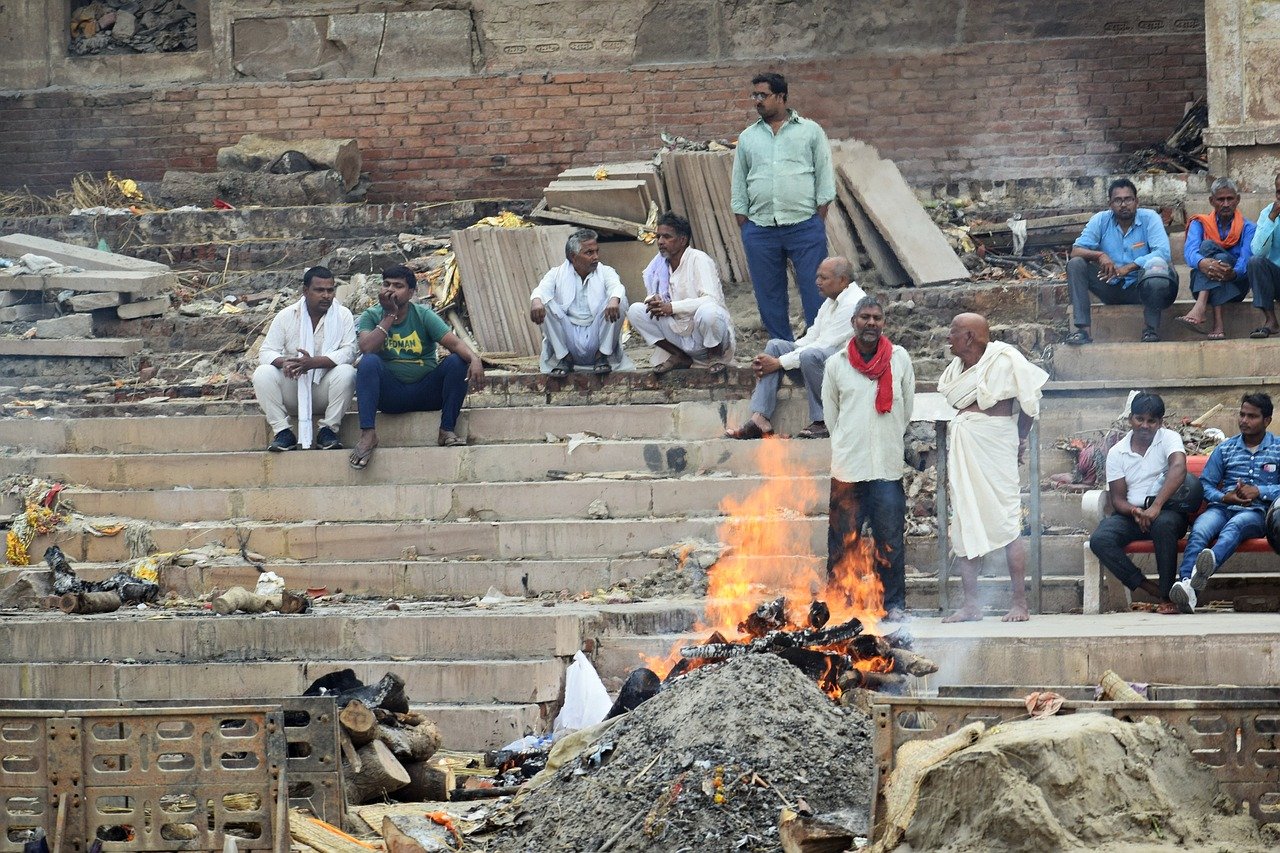
One of the most immediate and profound practices in Hindu funeral traditions is the cremation. In Hinduism, cremation is widely preferred over burial, as it's believed to release the soul from its earthly attachments and facilitate its journey to the next realm or rebirth, a key element of the cycle of rebirth Hinduism. The body, considered a temporary vessel, is returned to the five elements (Pancha Bhoota). The eldest son typically lights the pyre, a poignant act of respect and release, central to many Hindu funeral traditions. I can only imagine the weight and significance of carrying out such a sacred duty for my own father or grandfather – a true act of love and closure within these Hindu funeral traditions.
Before cremation, certain rituals prepare the body. It is often washed, adorned, and placed with specific offerings. Family members participate in these acts, each touch and prayer a final farewell according to Hindu funeral traditions. The atmosphere, while sad, carries a sense of purpose, of aiding the beloved on their path, as prescribed by Hindu death rituals. Here are some key aspects of Hindu funeral traditions in more detail:
- Preparation of the Body: The deceased's body is typically washed and adorned in new clothes, a significant part of Hindu funeral traditions. Holy ash or चंदन (sandalwood paste) might be applied.
- Visitation (Darshan): Family and friends gather to pay their last respects before cremation, often offering flowers. The body faces south, symbolizing the journey to the land of ancestors, a meaningful aspect of Hindu funeral traditions.
- Cremation Ceremony (Antyesti Sanskar): This is the most significant ritual, forming the core of Hindu death rituals. The body is placed on a pyre, traditionally by a river or holy site. The eldest male relative usually lights the pyre, symbolizing the release of the soul, a critical element of Hindu funeral traditions.
- Collection of Ashes (Asthi Visarjan): Days after cremation, remaining ashes and bones are collected. These are often immersed in a sacred river, like the Ganges, which is believed to carry the soul to heaven or facilitate rebirth, linking directly to the cycle of rebirth Hinduism. This practice is integral to Hindu funeral traditions.
- Post-Cremation Rituals (Shraddha): These ceremonies help the soul transition smoothly and offer peace to ancestors. They extend over several days or even a year, involving prayers, feasts, and offerings to Brahmins, solidifying their place within Hindu death rituals.
These practices, while specific to Hinduism, share a universal thread: the human need to honor, to say goodbye, and to provide comfort. Many cultures have their own deeply significant goodbye traditions, like those we explore in an article about faith-based farewell traditions through faith and culture. Memories of Life understands this universal need, providing a platform where these personal and cultural rituals, including a focus on Hindu funeral traditions, can be documented and shared.
Further insights into how Hindu funeral rites explained can offer solace and structure during times of profound loss, highlighting the cultural significance of each step.
When considering traditional observances, it's helpful to have "Hindu funeral rites explained" to understand the full scope of these sacred practices, which are all part of the larger Hindu death rituals.
From the preparation of the body to the final cremation and post-cremation ceremonies, understanding Hindu funeral rites explained can provide clarity and comfort during a difficult time.
The Importance of Post-Cremation & Digital Memorial Rituals
The journey doesn't end with cremation. In Hinduism, a series of post-cremation rituals, primarily known as Shraddha, are observed. These are vital for the spiritual well-being of the departed soul and the living family, completing the framework of Hindu death rituals. I've often seen the immense dedication families pour into these ceremonies, understanding that their efforts are directly supporting their loved one's passage within the cycle of rebirth Hinduism. These rituals involve offering food, prayers, and sometimes charitable donations, believing that these acts of remembrance and compassion aid the soul's progress through the afterlife and impact its next incarnation, further emphasizing the significance of the cycle of rebirth Hinduism.
The first thirteen days after death are particularly significant, often involving daily prayers and observances, a crucial component of Hindu death rituals. I've spent time with families during this period, witnessing their quiet devotion and the sense of unity that emerges from collective grieving and prayer. This period culminates in a feast shared with family and friends, signifying a return to normalcy while profoundly remembering the deceased. It’s a powerful blend of sorrow and moving forward, rooted in deep respect, reflecting the essence of Hindu funeral traditions.
In our modern world, where families are often spread across continents, observing every traditional ritual can be challenging. This is where digital remembrance design and online tribute platforms become invaluable. Memories of Life provides a unique solution, allowing families to create enduring online tributes to their loved ones. Imagine a memorial page where you can upload photos from these significant rituals, share stories of their life, and even post time-locked messages that can be revealed on future anniversaries or special dates. This feature, in particular, resonates deeply with me; the idea of receiving a long-lost message from a departed loved one, years from now, offers a profoundly touching connection across time, ensuring the longevity of Hindu funeral traditions.
Creating a beautiful create partner memorial allows modern families to bridge the geographical gaps while still honoring the essence of Hindu death rituals. It becomes a central hub for family tree connections, enabling relatives from different parts of the world to contribute memories, light a virtual candle, and participate in a collective act of remembrance. I've seen how powerful this can be, uniting families in shared grief and celebration of life, regardless of distance. It's about adapting tradition for a new era, ensuring that the essence of remembrance continues, particularly for Hindu funeral traditions.
The Role of Memories of Life in Preserving Legacy and Honoring Traditions
In a world that moves so quickly, finding a quiet, permanent space to honor a loved one's memory is more important than ever. I’ve often felt the urge to share stories, to show pictures, to keep those precious moments alive, but without a dedicated space, they can feel scattered and easily lost. This is precisely where Memories of Life shines. Our platform offers free forever memorial pages, ensuring that your loved one's legacy, and the rich traditions surrounding their passing, are preserved indefinitely, upholding the spirit of Hindu death rituals.
The Hindu death rituals, with their focus on spiritual continuity and the soul's journey, lend themselves perfectly to the lasting nature of a digital memorial. Here, you can:
- Document Rituals and Ceremonies: Share photos and videos of the Shraddha ceremonies, the immersion of ashes, or any significant prayers performed. This creates a visual and narrative record of their spiritual farewell within the framework of Hindu death rituals.
- Share Life Stories and Virtues: Reflect on their life, their contributions, and how they embodied the principles of karma and dharma, which are integral to the cycle of rebirth Hinduism. These stories can inspire future generations.
- Connect Generations through Family Tree: For families steeped in tradition, our family tree feature allows you to link memorials, providing a visual lineage and demonstrating the ongoing flow of life within the family and the significance of the cycle of rebirth Hinduism.
- Utilize AI Condolence Assistant: In moments of grief, expressing condolences can be difficult. Our AI condolence assistant helps family and friends craft heartfelt messages, ensuring that expressions of sympathy are meaningful and respectful, aligning with the solemnity of Hindu funeral traditions.
- Send Time-Locked Messages: Imagine scheduling messages for future Shivaratri or Diwali festivals, or for significant anniversaries, to be revealed years from now. It's a way for your loved one's presence to continue to be felt, offering comfort across time, a unique way to respect lasting Hindu funeral traditions.
I believe that memorial site ease of use is paramount during a time of grief. Our platform is designed to be intuitive, allowing you to focus on remembrance rather than technical complexities. You can easily upload images, write tributes, and invite others to contribute, creating a rich tapestry of memories that reflects the depth of Hindu funeral traditions and the enduring belief in the cycle of rebirth Hinduism. It’s about creating a living testament, a beautiful space where the past, present, and future converge in remembrance, honoring all aspects of Hindu death rituals.
Understanding the spiritual journey after death Hinduism describes provides a unique perspective on grief, emphasizing continuity rather than absolute finality.
Embracing the Journey: Grief, Remembrance, and Rebirth
Grief is a deeply personal journey, no matter our cultural or religious background. Yet, for me, understanding traditions like the Hindu death rituals offers a profound framework for processing loss. It provides a sense of order and purpose in the face of what often feels chaotic and meaningless. The idea that life is a continuous cycle of rebirth Hinduism, that the soul embarks on a new chapter, can transform the nature of sorrow into a more hopeful contemplation of existence.
We don't always get to say the goodbyes we wish we could have. The conversations we carry in our hearts, the unspoken words-they linger. That’s why platforms like Memories of Life are so vital. They offer not just a place to remember, but a space to continue the conversation, to share the stories that define a life, and to connect with others who also feel that void. It's a way to ensure that the individual's journey, their karma, and their legacy are honored and remembered perpetually, especially given the emphasis on the cycle of rebirth Hinduism. We can create a dedicated digital space for personal narratives and shared memories, ensuring that the wisdom gleaned from a lifetime echoes through the ages.
In our increasingly digital world, families are finding meaningful ways of creating a Hindu memorial online, allowing for global participation and a lasting tribute that transcends geographical boundaries.
I've learned that remembrance isn't about holding onto pain; it's about holding onto love. It's about celebrating the life that was lived and acknowledging the ongoing spiritual journey. By embracing the richness of Hindu death rituals, we can find a deeper appreciation for the interconnectedness of life and death. If you're seeking a way to honor a loved one's memory with dignity and permanence, to create a space that reflects the enduring belief in the cycle of rebirth Hinduism, then consider creating a permanent digital memorial with Memories of Life. It's a place where memories flourish, traditions are upheld, and the essence of a cherished life continues to inspire, deeply interwoven with the significance of Hindu death rituals.
The platform stands as a modern testament to ancient reverence, a place where solemn remembrance integrates seamlessly with digital innovation. In this way, we ensure that the respect for ancestors and the belief in spiritual progression, which are cornerstones of Hindu philosophy, continue to be upheld and passed down. The focus on long-term preservation and accessible memory-sharing creates a meaningful bridge between generational legacy and contemporary expression. I’ve observed that for many, this provides a unique kind of healing, a quiet affirmation that their loved one's presence, though transformed, remains eternal, a continuation within the grand cycle of rebirth Hinduism.
When we reflect on the deeper meanings behind these farewells, we find not just sorrow, but also profound wisdom. The Hindu funeral traditions remind us that every moment is precious, every action significant, and every soul's journey infinitely valuable. Memories of Life is here to help you articulate that value, to honor that journey, and to provide comfort in the continuous flow of existence, offering a lasting digital memorial that truly encapsulates the spirit of your loved one's life and the profound respect embedded in Hindu funeral traditions.
Exploring these profound customs provides a deeper appreciation for the diverse ways humanity approaches death and remembrance, contributing to our broader understanding of Religious Goodbye Traditions across the globe.
In our increasingly digital world, the creation of online obituaries Hindu tradition allows families to share memories and honor their loved ones with a wider community, blending ancient customs with modern technology.
The profound meaning of rebirth in Hinduism offers a comforting narrative for those grappling with loss, framing death as a transition within an eternal cycle.
Ultimately, these Hindu practices offer a unique lens through which to understand the broader spectrum of Religious Goodbye Traditions across the globe.
The deeply symbolic अंत्येष्टि (Antyesti) rituals are not merely a ceremony but a profound spiritual journey for the departed soul, guiding it towards its next existence.
Navigating loss within the Hindu faith also includes specific approaches to emotional well-being, and resources exist for grief support for Hindu families that integrate cultural and spiritual insights.
Learn more about meaningful farewells in our guide to Religious Goodbye Traditions: Faith, Culture & Lasting Farewells.