The Geography of Memory
When someone passes away, the world doesn’t stop, it just becomes filled with reminders. A bench, a cafe corner, a quiet stretch of road. These ordinary spaces become sacred through association. For a long time, I avoided them. Each visit reopened what I had lost. But slowly, I realized those places weren’t just reminders of death, they were proof of life lived fully. They were coordinates of connection.
That realization became the seed for how Memories of Life began, a way to turn those private emotional geographies into gentle, shared maps of remembrance.
While creating a personal memorial can be a powerful way to remember, sometimes the most profound act of remembrance comes from having the opportunity to say a meaningful last goodbye.
This realization ultimately led to the development of our platform, providing a unique way for families to engage in memorializing loved ones locations, transforming personal grief into shared tributes.
This concept extends beyond simple memorials, embracing the profound connection between our emotions and the physical spaces that become special places for remembrance, often leading to the powerful act of creating personal memorial maps.
Exploring sentimental locations for grieving can provide profound comfort, allowing individuals to connect with memories in tangible ways.
Exploring various memorializing loved ones locations can offer solace, providing tangible connections to cherished memories and a sense of enduring presence.
This concept extends beyond simple memorials, embracing the profound connection between our emotions and the physical spaces that become special places for remembrance.
Why Locations Matter in Grief
Grief is not only emotional; it’s geographical. It anchors itself to places. Where we said hello, where we said goodbye, where silence now speaks. Mapping memorial locations gives form to that invisible map we all carry inside. It lets us see how love connects spaces across distance and time.
For me, marking each place was both a ritual and a release. It allowed me to move from avoidance to appreciation. Instead of seeing a park bench as a painful reminder, I began to see it as part of a constellation, one of many points that told the story of her life and ours intertwined. The importance of preserving these stories cannot be overstated, as they contribute to a powerful legacy.
50 Places That Hold Memory
Over the years, I’ve noticed how different people choose different types of locations to remember their loved ones. Some are deeply personal; others are public and symbolic. Here are fifty that families, including my own, have marked as memorial coordinates. Use them as inspiration to start mapping your own. Over the years, I’ve noticed how different people choose different types of locations to remember their loved ones. Some are deeply personal; others are public and symbolic. Here are fifty that families, including my own, have marked as memorial coordinates. Use them as inspiration to start mapping your own for meaningful remembrance.
Everyday Places
- The kitchen table where laughter filled mornings
- A favorite bench under the tree they loved
- The coffee shop where they always ordered the same drink
- The garden they planted every spring
- The quiet corner of a balcony where they watched sunsets
Places of Beginnings
- The hospital or home where they were born
- The first apartment they ever rented
- The street where you first met
- The school or campus that shaped who they became
- The city they dreamed of but never got to visit
Places of Love
- The beach where you walked hand in hand
- The mountain view they couldn’t stop photographing
- The restaurant where anniversaries were celebrated
- The theater where you laughed through bad movies
- The field where they taught the kids to ride bikes
Places of Farewell
- The hospital room that became both goodbye and gratitude
- The church, hall, or garden where farewells were said
- The airport gate where distance began
- The cemetery, sea, or hilltop where ashes were scattered
- The last place you saw them smile
Places of Peace
- The forest they loved walking through alone
- The lake that always calmed them
- The hiking trail where they’d stop to breathe and watch the horizon
- The window that caught their favorite kind of light
- The spot where you now go to think of them
Digital and Symbolic Spaces
- A saved message thread or voicemail
- A social media memory that resurfaces each year
- A photo folder labeled simply with their name
- A virtual tribute created by family
- A song added to a shared playlist
From Physical to Digital Maps
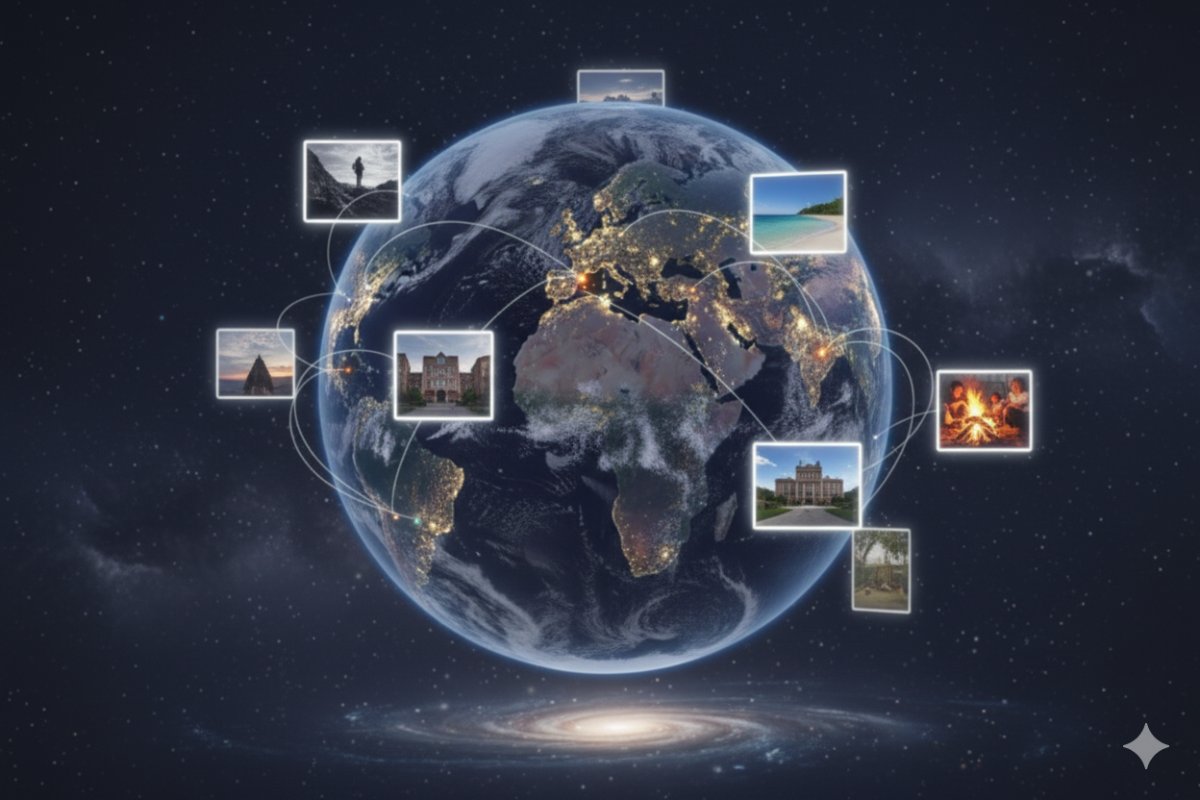
When we began experimenting with easy memorial creation, one of the most powerful features turned out to be geographic mapping. By allowing families to pin memories to real coordinates, we transformed grief from something abstract into something beautifully visible. Instead of being confined to a single headstone or album, love could be seen stretching across continents, a living mosaic of remembrance.
Seeing the first completed map on screen felt emotional in a way I didn’t expect. It looked like constellations, points of light forming a story. I realized grief isn’t just something we hold in our hearts; it’s something we can see reflected in the world around us.
The Power of Shared Mapping
When families collaborate on a shared map, something beautiful happens: grief becomes collective healing. Each person contributes a different memory, and together they form a fuller picture of who their loved one was. One person marks the café where he laughed the loudest; another marks the place he last worked; another, the field where his ashes were spread.
This kind of shared remembrance feels especially meaningful when paired with the principles I wrote about in family coordination and memorial access. Clear roles and gentle communication ensure that every voice is heard and every memory is treated with care.
Respecting Boundaries and Privacy
Of course, mapping real locations brings responsibility. Not every place should be public, and not every story should have GPS coordinates attached. That’s where ethical remembrance comes in, the delicate art of choosing what belongs to everyone and what remains sacred.
Even when grief feels overwhelming, choosing meaningful last goodbyes locations can be a crucial step in beginning the healing process.
I explored this deeper in my reflections on digital memorial boundaries and consent. Before marking any location, I always ask myself: would they have wanted this shared? If the answer is uncertain, I keep it within a private circle or mark it symbolically instead. This article can have UP TO 5 new links (currently has 0 internal links, cap is 6). For families looking for a more permanent online solution, creating a lasting tribute can be a meaningful way to honor a loved one's memory.
When seeking comfort, many find profound peace in revisiting places to visit after a loss, allowing for quiet reflection and a renewed connection to the departed.
Modern tools allow both, families can create public maps for general remembrance and private maps for personal reflection, connected but distinct.
Rituals Around Place
Once you’ve mapped your special locations, the next step is visiting, or revisiting, them with intention. Some people walk from place to place each year on anniversaries, while others light digital candles through their online tribute map. The ritual doesn’t need to be grand; it just needs to be real. A social media memory that resurfaces each year A photo folder labeled simply with their name A virtual tribute created by family. You can also explore tribute options like digital candles and flowers, a song adde
I often revisit one particular place: a small clearing near the sea. I bring a few flowers, sit in silence, and let the world speak. Each visit feels different, sometimes sad, sometimes peaceful, always grounding. As I wrote recently about healing after loss, returning to meaningful places can be one of the gentlest ways to move forward while keeping love near.
Using Digital Tools to Stay Connected
One of my favorite features of modern remembrance platforms is the ability to set notifications when someone visits a location or adds a tribute nearby. Through circles and private tribute settings, families can choose who receives these gentle alerts. I’ve found comfort in receiving a quiet message like, “Your cousin lit a candle near her resting place today.” It reminds me that love is still active, still alive, still shared.
How Mapping Aids Healing
When you see all your memorial locations together, healing begins to look like movement. You realize that love has covered so much ground, it wasn’t confined to a single city, home, or moment. This visual connection helps grief evolve from isolation into inclusion. The map becomes a reminder that their life touched many others, in many places.
Each coordinate is both a point of sorrow and gratitude. Visiting them turns grief into pilgrimage. It transforms loss from something static into something dynamic, an ongoing conversation with the world.
Keeping the Map Honest
It’s tempting to only mark the beautiful places. But grief has its rough landscapes too. Sometimes the most meaningful coordinates are the ones where things were hard, the hospital room, the goodbye, the silence. These places deserve presence too. They remind us that love was strong enough to endure pain.
When I look at my map now, it’s not perfect. It’s real. It’s an honest geography of what it means to love someone completely, through laughter and through loss.
Digital platforms offer innovative ways to consider how to honor someone's memory geographically, extending remembrance beyond physical boundaries.
Building Your Own Memorial Map
You can start with a single place. Choose somewhere that feels meaningful and mark it quietly. Add a short message, a photo, or a small note. If you’d like to make it interactive, you can create a memorial and begin building your own constellation of remembrance, each point a story, each story a piece of the person you loved.
Over time, you might find that your map grows, not just in number of locations, but in layers of meaning. New places appear as you continue living. You visit a city they never saw but would have loved, and you mark it for them. You return to old haunts and add new reflections. The map evolves as grief does, never finished, always alive.
Beyond the traditional, discovering unique memorial sites for personal reflection can provide a therapeutic space for individuals to process their grief in solitude.
From Grief to Geography: The Beauty of Seeing Love Spread
When I zoom out on my memorial map, I see dots scattered across oceans and continents. Each one represents a moment, a memory, a pulse of love that still radiates. It’s strange, but comforting, to see grief made visible, to realize that what once felt like loss has become a global pattern of remembrance.
In that view, love doesn’t end at the edge of a grave or a city. It expands, creating its own geography of connection. And in that way, we never truly lose anyone; we simply learn to find them in new coordinates.
Final Thoughts
Mapping memorial locations turned my grief into something I could navigate. It reminded me that love leaves landmarks, and it’s okay to keep visiting them. Whether physical or digital, these places tell us: “You loved, you were loved, and it still matters.”
If you ever want to see your memories of life spread gently across the world, each story, each goodbye, each act of love, begin with one simple step. Create a memorial, add your first pin, and watch how even in loss, love still connects us all.
Ultimately, finding these unique spots is part of a broader journey to discover creative ways to honor a loved one, transforming sorrow into enduring tributes.
Whether a quiet garden or a bustling city park, identifying special places for remembrance can deeply enrich the grieving process.
Beyond physical sites, understanding the digital landscape is key to memorializing loved ones locations virtually, ensuring their stories resonate for generations.
Ultimately, discovering these unique personal memorial locations contributes to a broader understanding of creative ways to honor a loved one, ensuring their legacy endures.
Choosing destinations that resonate deeply as sentimental locations for grieving can transform a simple visit into a profound act of remembrance and healing.
Understanding the significance of various grief and remembrance places helps individuals forge a deeper, more meaningful path through their mourning.