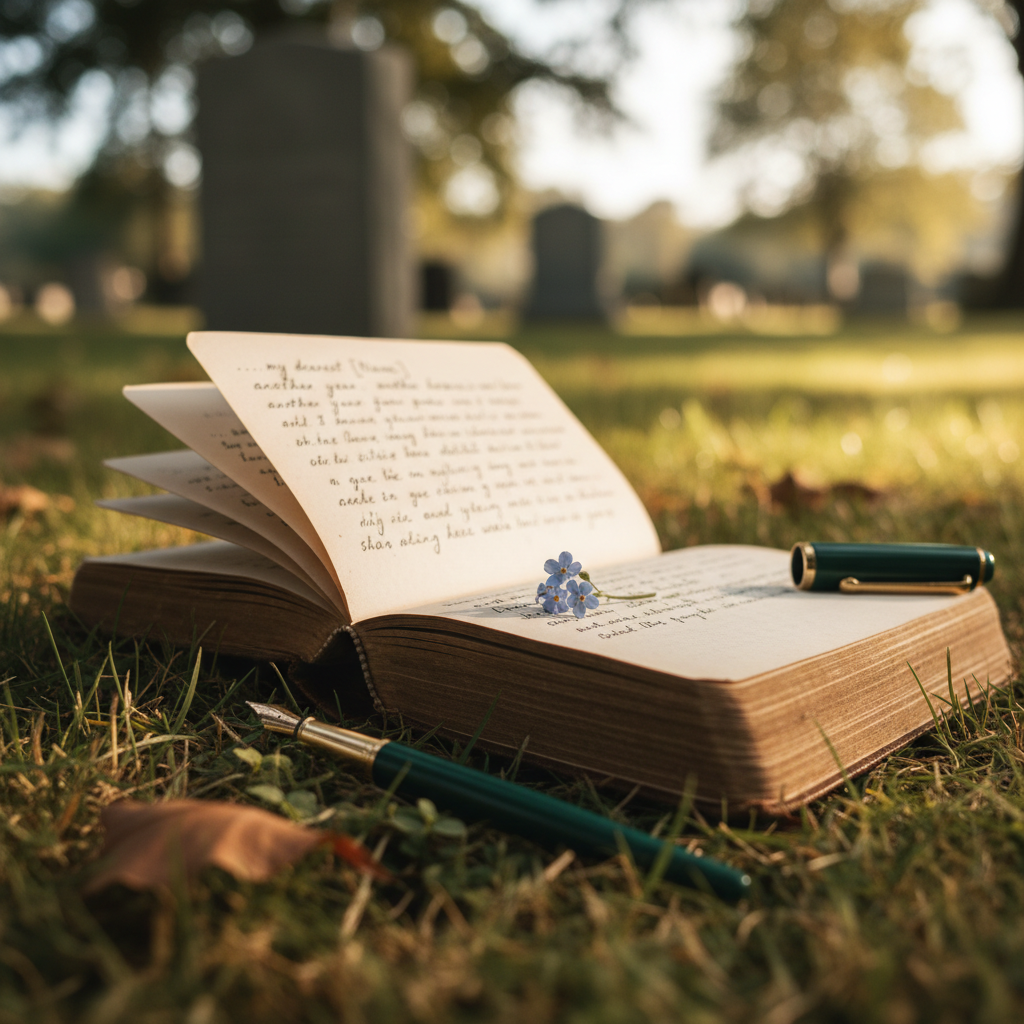

The Unspoken Conversations: Why We Write Graveside Letters
I've stood at countless gravesides, feeling the quiet weight of things left unsaid. We all have those moments, don't we? Conversations that never happened, apologies that hung in the air, declarations of love we wished we'd voiced just one more time. It's in those silences that the urge to communicate becomes almost overwhelming. For many, including myself, writing graveside letters offers a profound way to bridge that gap, to continue the dialogue with those who are no longer physically with us. For many, including myself, writing graveside letters offers a profound way to bridge that gap, to continue the dialogue with those who are no longer physically with us. These graveside letters are a unique form of ongoing connection, a tangible expression of love beyond loss. For a more comprehensive guide on this, consider comforting words for loss. For a more comprehensive guide on this, consider understanding this profoundly.
The act of putting thoughts onto paper, knowing they'll rest with our loved one, can be incredibly therapeutic. It's not about sending them into the void; it's about acknowledging our ongoing connection, our enduring love, and the impact they continue to have on our lives. I've found immense comfort in this ritual of writing cemetery letters, whether it’s a simple note or a deeply personal reflection. It’s a purposeful personal reflection that allows us to process emotions, find a measure of closure, and honor the memory of those we cherish. The practice of writing cemetery letters offers a way of personal healing for navigating the journey of loss. The practice of writing cemetery letters offers a way of personal healing for navigating the journey of loss.
While leaving letters at a graveside can be a deeply personal act of remembrance, there are also many beautiful ways to continue celebrating her life, especially on special days like her birthday.
Many find solace in the act of writing letters to deceased loved ones, transforming grief into a tangible expression of enduring affection.
Engaging in memorial rituals for healing, such as writing letters to leave at the graveside, can provide a profound sense of closure and continued connection.
For some, this takes the form of a simple note tucked under a stone. For others, it might be a detailed reflection about life events, read aloud quietly, or even a continuous dialogue over many visits. There's no right or wrong way to engage in this practice of writing cemetery letters. When we consider letters to departed loved ones, what matters is the intention, the act of reaching out from the heart. It's a testament to the fact that love doesn't end with physical presence; it simply transforms. This transformation underscores the importance of preserving these memories and stories for future generations. This transformation underscores the importance of preserving these memories and stories for future generations.
This practice is a deeply personal way to honor a loved one at cemetery, allowing for a unique and ongoing dialogue. It provides a quiet space for reflection and connection beyond mere visits.
If you're wondering what to write in a graveside letter, remember there are no strict rules, only opportunities to express your heart and maintain your unique connection. Many find it helpful to start by simply talking about their day or sharing a cherished memory.
Many people find that the act of **writing letters to deceased loved ones** brings a unique sense of peace and continuity in their grieving process. This practice allows for a continued connection, a way to express thoughts and feelings that might otherwise remain unspoken.
Many find solace in the therapeutic writing involved in creating these graveside letters, fostering a sense of continued relationship with those they miss. It's a deeply personal journey, and for many, a necessary one. These graveside letters become a part of the memorial stewardship, a way to honor and remember.
Engaging in grief journaling at graveside offers a profound way to process emotions and maintain a connection with the departed, even when words feel insufficient.
Finding Your Voice: What to Include in Letters to Departed Loved Ones
When I first considered writing graveside letters, I felt a familiar pressure-the need to be profound, eloquent, to say everything perfectly. But I quickly learned that authenticity trumped perfection every time. These letters to departed loved ones aren't for an audience; they're for you and your loved one. They're a tangible expression of your internal world.
Many find solace and a structured outlet for their emotions through grief journaling at graveside, transforming sorrow into a tangible record of love.
So, what can you include when writing cemetery letters? Anything that comes to mind, truly. I often find it helpful to think about what I would say if they were still here, sitting right beside me. Sometimes it's a recent event, sometimes it's an old memory, and sometimes it's just a simple "I miss you." In these letters to departed loved ones, every word is a connection.
- Updates on your life: Share big news, small triumphs, or daily happenings. It’s like catching them up on what they've missed. This allows for a sense of continuity in your writing cemetery letters.
- Memories: Revisit cherished moments, funny anecdotes, or significant events you shared. Reliving these can bring both joy and healing, enriching your letters to departed loved ones.
- Unexpressed feelings: This is a safe space for apologies, forgiveness, gratitude, or even lingering frustrations when composing letters to departed loved ones. It's okay to be honest.
- Hopes and dreams: Talk about your future plans, aspirations, and how their memory continues to inspire you. These often find their way into profound graveside letters.
- Simple messages of love and longing: Sometimes, the most powerful words are the simplest, like "I love you" or "I wish you were here." Such sentiments are core to writing cemetery letters.
I've written about mundane things, like the annoyances of traffic, and profound things, like how much I miss their wisdom. The content is less important than the act itself. This therapeutic writing can be a quiet ritual, a moment of profound connection when I'm visiting their resting place, especially when composing letters to departed loved ones. Create lasting online memorials, while different, also strives to capture this personal touch by allowing for these types of ongoing connections and enabling the sharing of graveside letters in a secure environment.
The Healing Power: Why We Need to Say Goodbye Again and Again
We often talk about "getting closure" as a singular event, a final farewell. But I've learned that grief isn't linear, and sometimes, closure is a continuous process. There are feelings that surface weeks, months, or even years later that demand acknowledgment. Writing these graveside letters helps facilitate that ongoing dialogue, that perpetual processing of loss. It's part of the journey toward emotional healing.
For me, the physical act of writing cemetery letters, choosing the paper, holding the pen-it creates a tangible link, transforming abstract grief into a concrete action. It helps solidify unspoken words, giving them a real presence. I know others who find comfort in writing memorial tributes, finding a similar solace in artistic expression, much like the process of creating letters to departed loved ones.
Understanding how to honor a loved one at cemetery extends beyond traditional ceremonies, encompassing personal rituals like leaving heartfelt notes.
It also reminds me that their story isn't over. My story with them isn't over. It just continues in a different form. The memory preservation aspects of this tradition are significant, keeping their essence alive in my thoughts and heart. When we engage in writing cemetery letters, we don't ever truly say a final goodbye; we just learn to carry them with us differently. These letters to departed loved ones are a testament to that enduring bond.
Overcoming the Blank Page: Practical Tips for Writing Your Letter
The biggest hurdle for me, and I suspect for many, is simply starting to write graveside letters. That blank page can feel intimidating, especially when your heart feels so full. I've found a few approaches that help ease into the process of writing cemetery letters:
Even with modern tools like an AI condolence message generator, the deeply personal act of connecting with ancestors through writing remains a powerful and cherished tradition.
- Don't overthink it: Just start writing whatever comes to mind, even if it feels jumbled or silly. You can always refine it later, or not at all. This approach is especially helpful when beginning letters to departed loved ones.
- Talk to them out loud first: Sometimes speaking my thoughts before writing them helps organize what I want to say, making the task of writing cemetery letters less daunting.
- Use prompts: If you're stuck, try a prompt like "I wish I had told you..." or "Remember when we..." or "This week, something happened that reminded me of you..." These can be great starting points for letters to departed loved ones.
- Write in short bursts: You don't have to write a novel. A few sentences or a paragraph is perfectly fine when crafting graveside letters. It's about consistency, not length.
- Don't edit yourself: Let the words flow without judgment. This is your raw, honest emotion, crucial for authentic letters to departed loved ones.
I once tried to write the perfect goodbye letter to my grandmother after she passed, and I froze. It was only when I let go of "perfect" and just wrote about her love for gardening and how the flowers still reminded me of her, that the words started to flow. It taught me the value of authentic expression over polished prose, especially when composing meaningful graveside letters.
Where to Leave Your Words: Honoring Their Resting Place
Once you've written your letter, the question often arises: what do you do with it? For graveside letters, the most common practice is to leave them at the gravesite or memorial marker. I've seen graveside letters tucked under stones, placed in small waterproof pouches, or even laminated for longevity. The memorial stewardship of these items is something I take seriously.
If a physical letter feels too exposed, or if you don't have a physical gravesite to visit, there are other meaningful options for your letters to departed loved ones. Creating a digital memorial is one powerful alternative. Memories of Life understands the profound need for connection and offers free forever memorial pages where you can store personal letters, photos, videos, and stories securely. It Explore how digital memorials in Christian traditions offer a modern way of Christian digital remembrance. You can learn more about Digital memorial platform guide with a free platform, offering another avenue for letters to departed loved ones.
For many, the act of saying goodbye at a graveside through written words provides a sacred space for final reflections and unspoken sentiments.
Exploring the diverse types of goodbye messages can provide further inspiration for expressing profound feelings during times of loss.
Through these written communications, individuals often feel a profound sense of connecting with ancestors through writing, bridging the gap between worlds.
Ultimately, graveside letters represent just one heartfelt approach within the broader spectrum of Types of Goodbye Messages: A Complete Guide to Farewell Letters, Poems & Tributes.
This practice is one of many gentle ways to cope with loss and remembrance, allowing individuals to process grief at their own pace.
The profound act of writing letters to deceased loved ones, whether for a graveside visit or an online tribute, provides a tangible outlet for enduring affection.
Learn more about meaningful farewells in our guide to Types of Goodbye Messages: A Complete Guide to Farewell Letters, Poems & Tributes.